Now this affects everything in your life!!

Leave a comment »

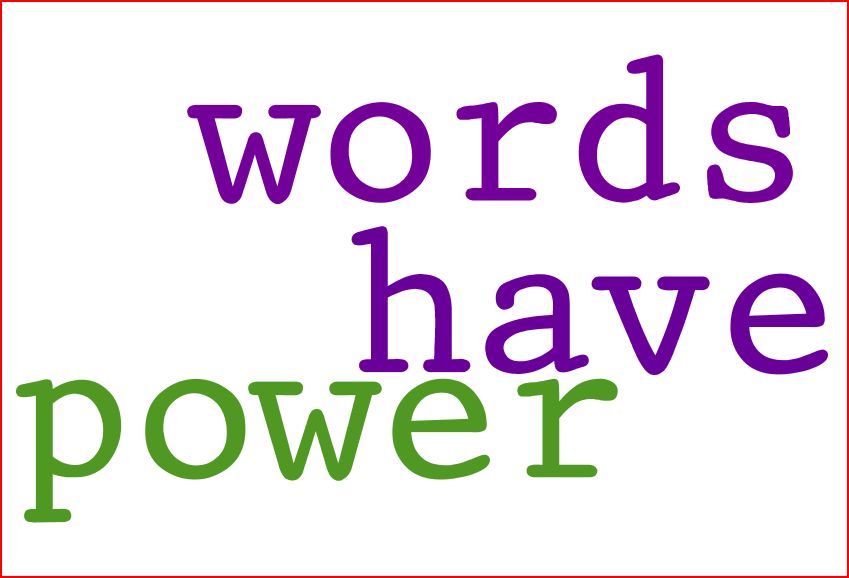
words-powerWords and thoughts have their own energy, including self-talk. Everything you think and say affects the way you feel and the energy you send out.

Try this little exercise. Read the paragraph below. Repeat it several times. It might be a little overboard, but it’ll help you get the point.

“I’m so useless and pathetic. I can’t seem to do anything right. I can’t ever get enough done!  I don’t know what’s wrong with me! I have every reason in the world to be happy and I can’t even seem to do that! I have so many things I need to get done and I’m not near as organized as I should be! I just don’t have what it takes to be a success! Other people are so much better than me. Gee, with my luck, I hope the plane I’m going on next week doesn’t crash.”

How does it make you feel?  Notice the reactions in your body.  How does it affect your mood?

Now read the following paragraph to yourself several times:

“I am so proud of myself. I put my best effort into work today, and I know I did a great job. I’m so grateful for all the wonderful people around me, and I really appreciate all the little things in my life. I’ve accomplished so many things today. I’m so thankful for my physical health and all the energy I have to get so much done each day! What a beautiful day it is outside today! I feel great! And I’m really excited about that plane trip next week.”

How does it make you feel?  Notice the sensations and reactions in your body.  How does it affect your mood?

Can you feel the difference?

Do you know what your self-talk is saying to you?

We have conversations in our mind 24/7 but we’ve become so used to them that we barely even notice what they are saying.  We often assume that our thoughts are more positive than they really are.  After all, we don’t want to think of ourselves as a NEGATIVE, UNAPPRECIATIVE COMPLAINER.

The truth is that we do tend to accumulate many negative beliefs and fears about ourselves and we do fill our mind with lots of negative, complaining thoughts that don’t serve us well.

This negative self-talk can be streaming through your mind way more often than you realize.

Some Main Points About Self Talk

  • Our inner talk is almost constant and most of the time we don’t even notice it.
  • Our subconscious mind listens to everything we say to ourselves and it affects the way we feel and the actions we take.
  • We often don’t try to create this inner talk, it just happens on auto-pilot.
  • The majority of our self-talk is negative rather than positive.
  • It can happen so quick, and one thought just keeps leading to another.
  • Negative self-talk attracts more negative self-talk.
  • The feelings and emotions produced by our inner talk can lead to anxiety, depression, sadness, lack of motivation, procrastination, and low self-worth.
  • The subconscious mind accepts all of our self talk as the truth, even when it’s a lie.

Positive, happy thoughts have a high vibrational frequency, while the energy of negative thoughts has a much lower vibration.

Our vibration affects how we feel. Negative vibrations lead to feelings of frustration, overwhelm, anger, and unhappiness.  Positive vibrations lead to positive feelings such as happiness, joy, peace and calm.

The way we feel affects the feelings of the people who are in our presence.  They pick up on the energy that we are sending out.


We are Responsible for How We Feel

It is the thoughts we think in response to certain situations and events that determines how we feel, not the external situation itself. It can be really hard to accept that it’s our thoughts that lead to so many of our feelings.

If someone criticizes me, my immediate thoughts could be, “Well they obviously think I’m useless, and they don’t like me. I’m never good enough. Seems I can’t do anything right.”

Those thoughts would make me feel pretty bad about myself and my value, and the way I feel would appear to be their fault.

But what if my thoughts had been different? What if I thought “Okay, point taken. Maybe I could have done that better. I did the best I knew how at the time. I’m sure they weren’t trying to hurt me. I can appreciate how they feel and I’ll learn what I can from the situation moving forward.”

These thoughts would have a completely different effect on my mood.

As hard as it is, when you realize and accept that you are responsible for how you feel (except of course, if you have a physiological or psychological imbalance), you can then begin to change your outlook on life. This is very empowering!

We Can Learn to be in Control of our Self Talk

The great news is our mind is completely retrainable!

You can learn to change your thoughts!

As Louise Hay says: “It’s only a thought, and a thought can be changed.”

My self-talk over the years has definitely been upgraded. It’s made a huge difference in how I feel about myself and how I interact with other people.  It’s helped me to feel more confident and secure in myself and to be more appreciative and content in life. It helps other people to feel more comfortable in my presence.

So, I know it can be done.  I’ve taught myself to be more aware of my thoughts, so I can detect it when I go into “negative” self-talk and take corrective measures.

The definition of mindfulness is “Paying Attention on Purpose, nonjudgmentally in the present moment.”

Begin to pay attention to your inner self-talk.  Jot down some of the thoughts you are saying to yourself.  Recognizing and acknowledging them can help take away some of their power. Don’t judge yourself for thinking them.  Just become aware of them and continually choose to “let them go.”

Think of holding a pen very tightly in your hand, and then open your hand and let it drop.  Repeat that visualization with the self-talk that doesn’t serve you.  Let it go.

It’s like a “catch and release” plan.  The more mindful you become of the thoughts in your mind and the more you practice releasing them, the better you will get at it!
 

Can I Control My Thoughts?

Leave a comment »

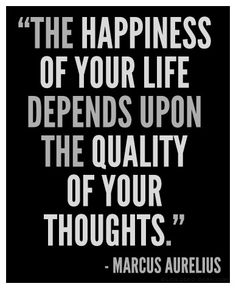
happiness-depends-on-thoughtsCan I control my thoughts?

We always hear how beneficial it is to think positive and when we think negative we create more stress, worry, depression in our lives.  The most successful people in life are the ones who think positive. 

Can we control our thoughts?  Where do our thoughts come from? What causes certain thoughts to pop into our head?

Does it ever seem like they just come at random, and there’s no rhyme or reason?

All of a sudden a memory from grade school, or something embarrassing you did ten years ago pops into your mind.

How weird is that! Where did that come from?

The bottom line is, thoughts come and go. Trying to control what thoughts occur when, or trying to stop certain thoughts from happening altogether can be impossible.

The truth is that trying NOT to think of something actually makes it more likely that you will. Deliberate attempts to suppress certain thoughts make them more likely to surface. If I tell you not to think of bugs bunny, what do you think you’ll think about?

You may not be able to control your thoughts, but what you can do is become mindfully aware of them. Develop the skill of observing and recognizing your thoughts without getting caught up in them.

Through practice, you can become better at watching your thoughts as they happen (this is the essence of mindfulness and meditation).

The first thing you will notice is there is a constant dialogue in your head — your mind is a thought factory. We are usually only aware of a small portion of the thoughts that are going on in our minds at any given time.

Self-experiment: if you want to prove (or dis-prove) this to yourself, start a timer for 10 minutes, sit down with a pen and paper, and write down every thought you have. You’ll be amazed at the number of thoughts that are bombarding your mind.  

Your mind is constantly going. Thoughts pop up and they lead to feelings which lead to behaviors and actions.

Quite often, this thought process (thought-emotion-action) is automatic.

Awareness and observation, however, allow you to interrupt it.

By paying attention on purpose to your thoughts, you can learn not to get swept away by them. You can learn to see them for what they are: temporary interpretations of situations. They come and they go, even though your mind tries to make you believe they are permanent (when you are experiencing anxiety or depression, you think it will never go away…which makes it even worse).

The same is true with feelings and emotions — you don’t have to dwell on them (or wallow in them). You don’t have to follow them down a path that culminates in you acting and reacting in a conditioned manner. You can watch emotions rise, and you can watch emotions cease. Nothing is permanent.

You can notice them, observe them and allow them to move on.

The more you practice this, the better you’ll get at hanging onto the thoughts that empower you and help you be the person you want to be and letting go of the thoughts that disempower you.

You can notice, “I was just thinking what a jerk he is.” And then choose to let that thought and feeling go.

Your awareness of the thought allows you to choose a response versus automatically reacting.

Tell yourself, “it’s just a thought.”

You can notice, “I was just thinking “Why can’t I be more organized?”  Again, you can choose to hang onto that thought or you can let it go.”

Just because we think a thought doesn’t make it true and most of our thoughts are not reality, but rather just an interpretation that our mind makes.

Therefore, it’s beneficial for you to mindfully be aware of what you are thinking, and then choose to tell yourself, “it’s just a thought” or “it’s just an interpretation or story my mind made up.”

What matters is how you let your thoughts, and all mental activity, affect you. Thoughts are like clouds floating across the sky: instead of getting caught up in them, you let them pass. They only hold power over you if you grab them, hang onto them and don’t let them go.

Unfortunately, people usually go through life operating on autopilot, being led around by their thoughts. As a result, they have higher levels of stress, anxiety, worry, fear, anger and self-doubt in their lives.

You don’t have to live on autopilot, however. You can start practicing now — become mindful (pay attention on purpose) of your thoughts, and as you become proficient at observing your mind, you’ll begin to interrupt the automatic process of thought-emotion-action.

The more you practice, the better you get. And life improves dramatically as a result.

Start becoming mindful of what’s going on in your mind today! Start to notice, observe and question your thoughts instead of taking them as gospel. Then you can start to manage the process of which thoughts you choose to hold onto and which thoughts you choose to let float on by.

Either you manage your thoughts or your thoughts manage you.


5 Phrases to Avoid in your Relationships!..

Leave a comment »

words-powerThese words can lead to disaster in your relationships!

Are you using them?

The right words spoken in the right way can bring love and respect.

The wrong words can lead to World War III.

Due to past painful events and hurts, there are common phrases that trigger our natural defensiveness and lead to DISPUTES AND CONFLICTS.

Here are 5 phrases, which left unchecked can damage your relationships and 5 strategies to replace them.


  1. ” Why can’t you be like Joe?”

Comparisons send out hidden negative messages.

  • There’s something wrong with you.
  • You’re not good enough.
  • I’m not happy with you.
  • You need to be different. 

Try this instead–Ask for what you need.

“I’d really like it if you would spend fifteen minutes helping me out.”(don’t say like Joe does)

“I’d really appreciate it if you’d make more of an effort to be on time.” (don’t say like Joe is)

2. “You shouldn’t feel that way.  Just get over it.”

When you negate someone’s feelings, they feel misunderstood and it increases emotional distance and disconnection between you.

Try this instead–Validate their feelings!

  • I can see you’re really upset.
  • That must have been painful.
  • I can see how you’d feel that way.

Validating someone’s feeling doesn’t equate to agreeing with them.  When you pause, listen, and allow an emotional space for their feelings to exist, you send a message that says:

  • I hear you.
  • I see you.
  • I get it.
  • I care about you and your feelings. 

Validation creates closeness and connection.

3. “You do it too!” (our inner eight year old coming out)

When you defend yourself with the “you do it too” argument, the other person feels rejected, resentment is built up and nothing is resolved.

“You just did the exact same thing to me last week so how dare you tell me how much it hurts you.”

Try this instead–Focus on “them” and not “you”

Let the bigger picture of a “great relationship” motivate you to truly listen without attacking what they’ve done as a way to justify your behavior.

Would you rather be right or would you rather be happy?


4. “What about the time you…….” (fill in the blank)

When you consistently bring up the past, it’s like trying to drive to California by consistently looking in the rear view mirror.  You’ll probably crash before you get there.

Try this instead-Focus on the present

Get into the discipline and habit of telling yourself:

“That was in the past–let’s deal with what’s going on now and focus on moving forward.”

Letting go of the past helps decrease conflicts and increases safety and trust in your relationship.

5. “You always put your friends and family first and you never make time for me!”

When a statement is started with YOU, it automatically puts the other person on the defense.  Now add the words ALWAYS and NEVER and that defensive position is quadrupled.

A conversation that begins this way has little chance of being productive.

Try this instead–Start with “I” and avoid using the words ALWAYS or NEVER

“I feel lonely and left out when you spend several hours per week with your family and friends.  I’d really like for us to be able to spend more time together.”

Nothing works perfectly in any relationship, but even if changing your words works 75% of the time, isn’t it worth it?

Want to improve every area of your life??

Leave a comment »

Need a Reason to choose Positive Thoughts??  Here’s 14!

happiness-depends-on-thoughts

1. Release Chemicals

Every time you release a thought, your brain releases chemicals and electrical signals that affect how you feel.

2. Alienate People

Negative thoughts cause you to feel internal discomfort and cause you to act in ways that alienate you from other people.

3. Increase Dopamine

Positive thoughts release dopamine which makes you feel good. When you feel good, you do better at everything you do, which includes the way you feel and behave towards other people.

4. Focus on Solutions

Positive thoughts and feelings help you to focus more on solutions, to see more options and possibilities.

5. Blinders to Solutions

Negative thoughts narrow your focus and blind you to seeing all the possible solutions; “I can’t figure this out–there’s no hope to make this better.”

6. Can Paralyze You

When you’re upset with someone, your anger and negative emotions consume you and you have a hard time turning it around. Negativity can paralyze you from making improvements.

7. Self-Talk 

Positive thinking starts with self-talk. It’s the unspoken words that are constantly running through your mind. Your self-talk is affecting your life even if you aren’t aware of it.

8. Powerful Asset

A positive outlook on life is one of the most POWERFUL ASSETS you can have.

9. Success

Positive people have more success, health, happiness, wealth and successful relationships.

10. Negativity Comes Natural

It’s quite common for self-talk to be negative unless we make an effort to change it. We have up to 70,000 thoughts per day and on average 70-80% of those thoughts are negative unless we make a conscious effort to improve them.

11. Control Thoughts

You DO HAVE the power to direct and control your thoughts. It’s like developing and strengthening a muscle, the more you use it, the stronger the muscle becomes. The more you practice taking control of your thoughts, the better you’ll get at it.

12. Negativity Feels Lousy

You CAN TRAIN your brain to be positive or you can allow it to be NEGATIVE. (but then you’ll feel lousy)

13. Strong and Powerful

Your words are STRONG and POWERFUL, whether you think them or speak them. They will leave a lasting impact on your life. So choose them wisely.

14. Positive Feels Better

The more positive you feel, the better you feel, the more everything around you improves. The first step to changing anything is AWARENE