
5 Masks We Wear and Why We Should Take Them Off

Leave a comment »

5 Masks We Wear and

Why We Should Take Them Off


How do you try to portray yourself to the people around you?

Are you truly yourself?

Or do you wear a mask?

We want to be liked.

We want to fit in. 

We often believe that who we really are deep down inside could never be liked, accepted or loved enough.

So, we put on a mask. A mask that we think people would like better than showing who we really are.

What mask(s) do you wear?

What if we could all take off our masks and be more of who we really are?

What if you were in a room with everyone you knew and all of a sudden a huge wind came up and blew off everyone’s mask. Everyone is exposed, maybe the first time, for who they really truly are, imperfections and all.

Now imagine that instead of using this vulnerability against one another you patted each other on the back, encouraged uniqueness and supported one another.

Isn’t it kinda sad that we’re afraid to be who we really are?

Isn’t it kinda sad that we feel like we’re not good enough?

That if people knew how we truly thought and felt, they wouldn’t like us, they wouldn’t approve of us?

Why can’t we relax and just be ourselves?

Authenticity is a genuine, quiet fulfillment and confidence that lowers our anxiety, self-doubt and stress.

Who wouldn’t want that?

Wearing a mask and pretending that we’re something or someone we’re not, (like constantly pretending we’ve got it together, or acting like we feel one way when we really feel another) is draining and emotionally taxing on us.

Below are five of the most common masks we wear.

Mask One:  “I’ve got it all together”

We’re all performing!

  • We pretend we have it all together because we don’t want other people to see how much we don’t.
  • We hate to let people know how far from perfect we feel our life really is.
  • We compare ourselves to someone else and feel we should have our life more together like they do.

When I tell people how I struggle with self-doubt and insecurity– I’m surprised at how often people reply—“Really-you feel that way-I never would have guessed it.”

When we take off our mask and share our struggles with people instead of trying to come across like we have it all together, we increase our connection with others. Everyone has similar issues; no one has a perfect life and we all have struggles.

Don’t be afraid to show your imperfections. You’d be very surprised to learn how much we all have in common in the area of feeling ‘less than’……

Our imperfections make us human, unique and relatable.

Life is life, it will never be perfect. 

But exposing your true imperfect self opens you up to a world of deeper, meaningful, and supportive relationships.

 Mask Two: “I’m so STRONG” 

I’m amazed at how many people PRETEND to be strong even when everything is falling apart inside. It takes even more energy to hide how much you’re struggling.

Coping with and juggling everything life throws at you can be tough.

We look at other people and think “they’ve got it all together-why can’t I be as strong as they are?”

Not wanting to admit that we aren’t, we PRETEND.

Pretending takes a lot of ENERGY….

You’d be amazed at how often you’d find out that the people you think are so STRONG are struggling inside just like you are.

It’s ok to be weak sometimes and ask for HELP. You don’t have to always pretend that you’re STRONG.

It takes more courage to ask for help than it does to put on a mask of strength and portray that you’ve got it all together.

Open yourself up to love and support. Tell others your fears, hopes and hurts. People care about you, people want to help you.

You don’t need to pretend how strong you are and that everything is okay.

Take off your mask and let other people help you.

Mask Three: “I’ve got it all figured out” 

We all want people to think highly of us.

Have you ever felt the ‘imposter’ syndrome?

It’s that gnawing feeling of not being good enough, not knowing enough, and being on the verge of being found out.

There’s something wrong with me and I’ll never get it together like I should. We try to keep this imperfection hid from other people by pretending that we’ve got it all figured out.

Many people in professional positions feel this.

The Lawyer —“I’ll screw up and people will find out what an imposter I am.”

The Doctor—“I have no idea how I even got into med school.”

It’d be great to feel like we always have it together, but you can’t avoid feeling failure, doubt and disappointment at times. That’s completely normal.

It’s okay to throw off the mask and stop expecting ‘superior’ qualities and just start appreciating that you’re a human who has failures and insecurities..

Mask Four: “Be Nice” 

Like most people, I want people to like me. I want to keep people happy.

Frequently in my life, I have put other people’s needs first because I don’t want them to be upset and I don’t want to alienate them. I want to keep them happy.

But, what expense is that to me?

I used to:

  • Agree too much with others
  • Wouldn’t say no
  • Felt afraid to stand up to people
  • Was deathly afraid of conflict.

I was often resentful when people weren’t treating me right or returning my own kindness.

It’s been a learning process to balance this ‘nice persona’ with making myself happy first.

It’s important to gradually peel off the mask of

people pleasing because it can make you miserable.

Putting your needs first, is the only way to truly love and be there for others, much like putting your oxygen mask on first in a crashing plane.

You’re no good to anyone if you’re drained and depleted.

Mask Five: “Grumpy” 

Have you ever known a really negative, grumpy person?

Some people love to put other’s down and complain every opportunity they get.

Why?

What purpose could this mask possibly bring?

Being a jerk is an intimidation factor, and an overcompensation for a lack of confidence.

Mean, negative behavior, like bullying, and aggression are often attempts to protect the fragile self-esteem.

They’ve been hurt and this mask protects them from being embarrassed, hurt or rejected again.

This mask is usually a sign of repressed, negative things inside that need to be healed, and until they are healed, they will keep getting projected out at other people.

What negative, grumpy people really need is a

lot more love, yet ironically, this mask keeps pushing other people away.

Be Authentic

Take Off Your Masks


Some people reach a point in their life when they are completely exhausted from wearing a mask(s)

It may be because of a major life obstacle; death, illness, divorce, complete unhappiness—–and they no longer have the energy to hold up all the masks.

They’re no longer willing to tolerate all the pain they’re feeling and they’re ready to just let all the masks go and be their authentic selves.

Take these steps to start peeling off the masks that no longer fit in your life.

STEP ONE

Notice what masks you are wearing. Being your truest and honest self begins with being brave enough to pay attention to the situations and circumstances under which you put on that mask.


STEP TWO: 

Start to peel away your masks. Allow yourself to be okay with who you really are. We all have a unique set of fingerprints for a reason. Once you learn to view yourself as a needed, necessary and wanted being, your confidence in your uniqueness will be contagious. Everyone has a story, and we all have a chapter we’d like to rip out of our book of life. Authenticity comes when you realize that you define who you are now and who you desire to be.


STEP THREE: 

Remind yourself that you’re not alone. Your most quirky qualities, embarrassing stories or difficult moments have the power to connect you to others. People like others who are open, comfortable with themselves, and who acknowledge imperfections.


STEP FOUR:

Focus on the goal of connection.

Your relationships will ultimately be better when you can be authentic and real with the people in your life.


If you want to form deep and meaningful relationships with others, you must show vulnerability. This means letting down your guard enough to let others in.

I think we’ll always wear some form of a mask in certain situations but I also think that we could all benefit from making it a goal to wear that mask less often.

Can you start taking that mask off more often and truly be yourself?

____________________________________________________________________________

Fay Prairie is a personal life coach and speaker specializing in relationships and POSITIVE, empowering mindsets.

She helps set you free from stress, anxiety, worry, negativity, and depression, so you can be a Better You, have Better Relationships and live a Better Life!

Contact Fay to set up a FREE 30 minute call to discover how Personal Life Coaching can help you to begin making positive changes in your life!

E-mail:  fay@fayprairie.com

Call:  507-829-0181

Fay also provides workshops and trainings for businesses and schools. Check out her speaking page by Clicking Here

Some of you know that Fay lost her son to suicide in 2009.  The journey of healing has led Fay to begin presenting her story along with what she has learned as a mother/counselor/coach to help SAVE LIVES.   check out her story by clicking here

A Powerful Gift to Give Yourself and Others

Leave a comment »

FREE GIFTAre you giving this gift to yourself and others?  
If you’d like to be a better you……have better relationships and live a better life, definitely start out by frequently giving this gift to BOTH yourself and others!

I’ll condense a story from the book QBQ by John Miller

John’s first job in sales was to recruit twenty sales managers to attend a five-hundred-dollar, two-day workshop.

“I was cold calling and working hard but by the time of the workshop, only nine people had registered.”

The day of the workshop, his boss looked out at the participants and said, “I see 20 people.”

John responded back, “I only see nine and I only sold nine tuitions.”

His boss smiled back and said, “I know, but I see 20 because I know you can do it.”

The next workshop was 60 days away and it was like a graduate school class in rejection. One day John made 75 phone calls and was turned down by all of them.

John thought “this is impossible.”

But his boss’s voice kept coming back to him.

 “John, I see 20.” “I see 20 because I know you can do it.”

Hearing his boss’s words again and again, John thought:

“Ok,maybe I can. Maybe I can.”

Have you ever been uplifted by having someone really believe in you?

Someone who helps you see and believe what is really possible for you?

Sometimes, when our belief in ourselves is stretched really thin, we need someone to transfer their belief into us.

What messages do you send to the people around you?

What messages do you send yourself?

Too often, instead of sending positive, encouraging messages like “I see 20!”-we send discouraging messages of doubt, such as:

“Why’d you do it that way?”

“Why can’t you get things done on time?”

“You can’t handle it.”

“You did what?”

“When will you get it right?.”

Each of these say:

“I doubt your capabilities,” 

“I don’t really think you can do it,”

“I don’t trust you to make good decisions.”

When we communicate negative messages like these through our words and actions to the people around us, and to ourselves, we do more harm than good.

Positively encouraging ourselves and other people is a POWERFUL service.

How does it make you feel when someone believes in your potential even when you don’t?
Can you pass that gift on to help pull someone else up?
Can you also work on giving this gift to yourself?

We all deal with vulnerability, uncertainty, and failure.

BELIEVING allows us to move forward in faith and trust that we’ll figure it out.

BELIEVING is the biggest difference between successful people and unsuccessful people. It isn’t intelligence, opportunity or resources.

BELIEVING is what makes it possible and allows you to make progress.

BELIEVING raises the bar on what we can learn and accomplish regardless of what’s happened in the past.

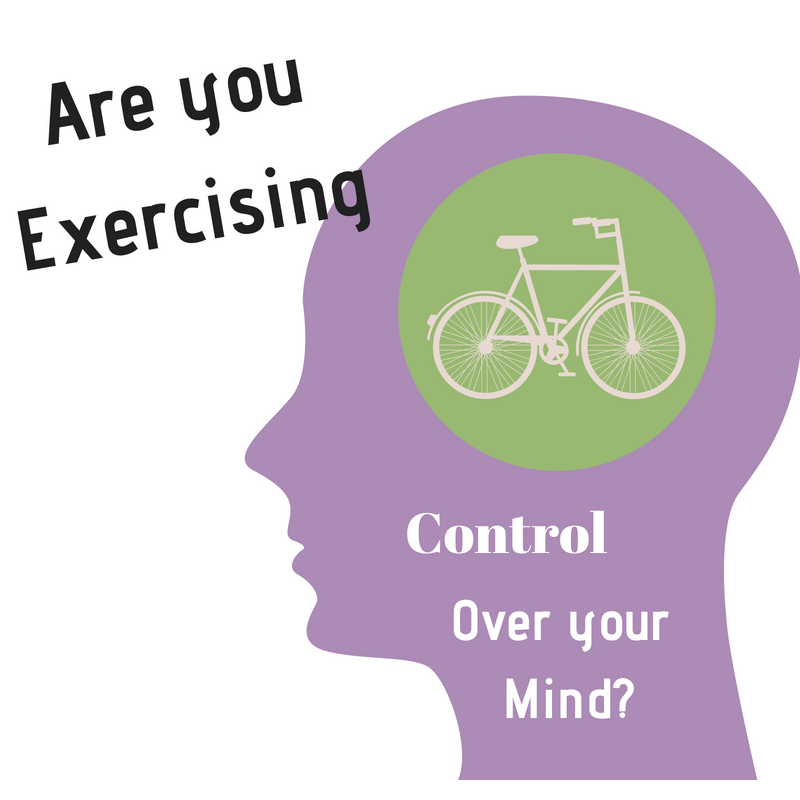
Is your mind controlling you or are you controlling your mind?

Leave a comment »

Are youExercisingPeople will often say to me,

“I wasn’t thinking anything.”

“I don’t really have any thoughts going on in my head.”

or they’ll say:

“I have a million thoughts bombarding me all the time.”

The truth is that you have anywhere between 60,000-80,000 thoughts per day so you think A LOT!!

It’s just that you haven’t been trained to think about what you’re thinking, or to take control of ‘monkey mind’ (that’s when you have hundreds of thoughts bouncing all over the place.)  Your thoughts have been going on for so long in the background of your mind that sometimes you just tune them out.  It’s like they’re there but they’re not really there.

Your thoughts are connected to your feelings and your actions. 


So, if you’re feeling resentful, angry, depressed, anxious, frustrated—it does have something to do with your thoughts.  Yet some people have no awareness of what those thoughts are.

They say if you asked a fish what water is—they wouldn’t have a clue.  It’s always been there—they don’t even notice it.

Changing your thoughts does have the ability to help you change your life.  


Yet, how can we change our thoughts if we’re not even aware of them?  The first step to changing anything is awareness.

Mindfulness helps you become aware of your thoughts. It also helps by give you a pause or a buffer of space between your thoughts and your reactions to those thoughts.

Do a google search and you can find hundreds of articles on research studies and the benefits of mindfulness.

Some thoughts have a positive effect in your life

Some have a negative impact and

Some thoughts have a neutral impact. 

Think of mindfulness of your thoughts like this:

Imagine yourself standing at a train station.

 As you watch, you notice trains coming and going. Imagine that these trains are like thoughts entering and leaving your mind.

 Some of the trains are looking pretty worse for wear and headed to a destination you don’t want to visit.

 Others are looking pristine and rolling along to somewhere exotic.

 Which trains do you allow to pass?

 Which do you hop onto?

 Notice how if you simply do nothing, the trains leave and are replaced with new ones (i.e. new thoughts).

 You can choose to observe the train cars coming and going without jumping on them.

 Mindfulness gives you the ability to allow thoughts that create mental suffering (frustration, anger, anxiety etc)  to pass through and move on without creating so much pain and misery for you.

Notice the trains arrive. Then, watch them leave.

Just like the train, the thoughts come and you observe them without getting attached to them and then you watch them leave, without hopping onto them.

With practice, you will notice that when the thoughts that have a negative impact on your life enter your mind, they will have less of an impact on your life.

I can’t tell you how many hours of frustration I have saved in my life since I’ve used this process to manage my thoughts instead of letting my thoughts manage me!

It’s so empowering and freeing to be able to choose which thoughts you let come and go.


That’s when life becomes

easier and less frustrating.


Save the date, Wednesday August 22 at 7 pm, for my next webinar in which I’ll share some techniques on how to use Mindfulness to decrease anxiety, frustration and worry.

I’ll send out a registration form next week.

13 Ground Rules for Challenging Conversations

Leave a comment »

13 Ground Rules for a challenging conversationMost everyone dreads the DIFFICULT, CHALLENGING conversation–the one where you have to deliver unpleasant news, discuss a delicate subject, or talk about something that needs to change or has gone wrong.

Just thinking about having these conversations-whether it’s with your partner, relatives, friends, or co-workers-can fill you with ANXIETY and DREAD. It can take up space in your mind that prevents you from being productive in other areas of your life.

We’re often fearful of the way the other person will react. 

It’s normal to want to avoid bad feelings, discomfort and conflict.

The truth is that avoidance in itself can lead to CONFLICT and allow the problem to get worse.

Instead of avoiding difficult conversations, it’s important to find the COURAGE to talk to people in a constructive way, with skill and empathy.

PLANNING and PREPARATION can help turn down the volume of your anxiety and make it much more likely that the difficult conversations you need to have will be successful.

As the saying goes, “Failing to prepare is preparing to fail.”

It’s best to plan a meeting time in advance.

  • “I’d like to talk with you about…”
  • Mutually agree on a time and a place for the conversation.

It’s never helpful to collect and hold onto feelings of frustration, anger or resentment for days, weeks, or longer, and then dump them on another person all at once.

Whenever possible, try to discuss challenging issues as they come up or SOON thereafter. (I can think of times when the only reason I finally talked is because I let it build up so long that I couldn’t hold it in any longer and it exploded out of me—not the best way to handle it!)

Being PROACTIVE works best.

Ground Rules

  • Everyone involved should be sitting or standing so you’re at the same eye level.
  • Speak CALMLY. If you are overly emotional with anger and resentment in your voice, they won’t hear your message because your emotions will be the focus.
  • Avoid finger-pointing. When you are blaming the other person, they feel like they are being lectured or put down which blocks communication.
  • Avoid name-calling, yelling, screaming, cursing, put-downs, insults, or threats. When any of these happen, the only thing other people hear is ANGER and ATTACK. As a result, they are likely to leave, shut down, or attack back. If you want your message to be heard, you have to deliver it RESPECTFULLY.
  • Be very clear and specific in describing the things you’d like to have happen or the things you’d like to change.
  • Avoid the words “always,” “never,” “everything,” and “nothing.” They may express your frustration and upset, but NO ONE likes to be told that they never do such and such or that they always do such and such.
  • No interrupting. When the other person is speaking, LISTEN with the intent of understanding what they are saying.

If you’re thinking about what you’re going to say in response, while he or she is still speaking, you’re NOT listening.

  • Approach the conversation with curiosity rather than judgment.Make sure you understand what the other person has said before you respond. If you’re not sure what he or she said or meant, ask for clarification. “Is this what you’re saying?” “Is this what you mean?”

(I can’t tell you how many times I’ve been wrong when I’ve asked that question and thought-“good thing I asked instead of assuming.”)

  • Make an effort to be more interested in “problem solving” than being right. When we feel we have to be “right” that means we are making the other person “wrong”.. When we come into it with the right and wrong mindset, it makes conflict more likely. It’s not about being right or wrong, it’s about understanding where each person is coming from and how they are seeing the situation.
  • Keep to the topic at hand. Bringing up past issues or complaints interferes with healthy communication during the current conversation. Remind each other, “this is what we’re talking about right now” Save those other issues for another time.

(It can be hard enough to deal with one issue so when we start throwing all those past issues into the playing field, we really complicate things)

  • Allow for the possibility of time-outs. Time-outs are not just for young children or professional sports teams.If things start to become too heated, it’s important for people to be able to take a time-out.

Time-outs are an opportunity to calm down and regain composure! 

  • Take responsibility for feeling the way you do, rather than blaming the other person. Use “I” statements – as in, “I feel…” Be clear and specific about what the other person did that contributed to your reaction.

Rather than saying, “You make me so mad,” say “I feel mad when you make fun of me in front of other people.” (focus on the other person’s actual behaviors)

  • Drop your assumptions. Just because you have been living or working together for a period of time doesn’t mean you know what the other person is feeling or thinking. What you want, need, or expect from each other changes and may need to be renegotiated from time to time.

_______________________________________________________________________________

Fay Prairie is a Relationship and Mindset coach. She helps set you free from stress, anxiety, worry, negativity, DEPRESSION AND FRUSTRATION so you can start creating a Better You, a Better Life, and Better Relationships.

Check our her counseling/coaching page by clicking here

Fay also provides workshops and trainings.  Check out her speaking page by Clicking Here

Contact Fay to set up a FREE 30 minute call to discover how Personalized Coaching can help you begin making positive changes in your life!

E-mail fay@fayprairie.com

Phone: 507-829-0181